WP4 – Mechanisms, Testing and Validation

Overview

Work Package 4 (WP4) provides the experimental backbone of the COMMUTE project. Its goal is to uncover the biological mechanisms that may link COVID-19 infection with an increased risk of neurodegenerative diseases, with a particular focus on Alzheimer’s disease and Parkinson’s disease.

To do this, WP4 combines state-of-the-art experimental models with insights generated by the project’s AI- and data-driven analyses (WP2 and WP3). This integrated approach allows us to move from computational hypotheses to real biological validation.

Why it matters?

Understanding how COVID-19 may influence long-term brain health is essential for identifying at-risk populations, discovering biomarkers, and accelerating new therapeutic strategies.
What does WP4 do?

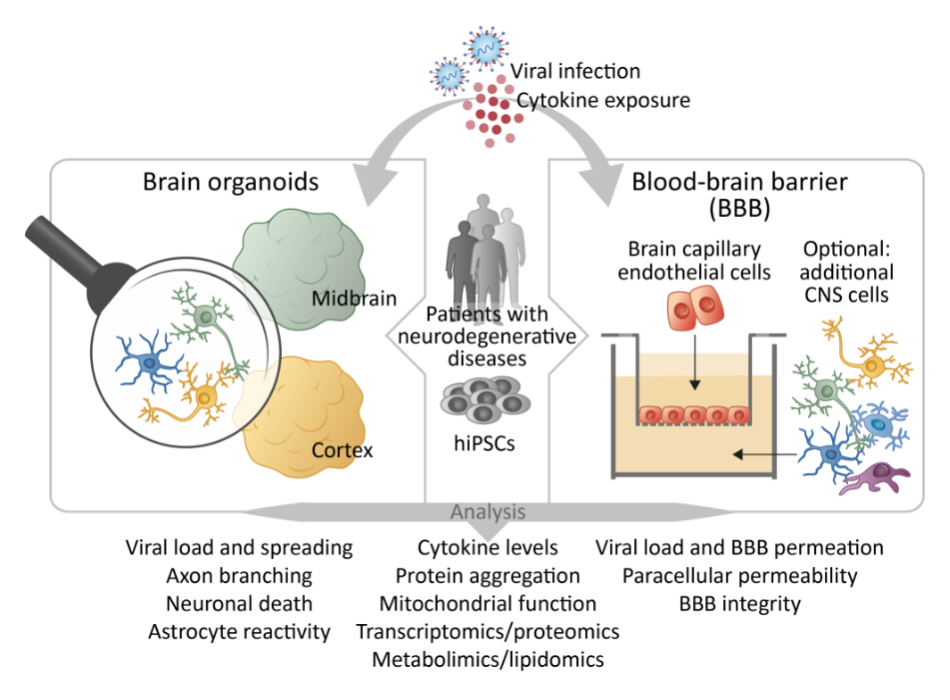
WP4 follows a hypothesis-driven strategy, using advanced 2D and 3D human-based models, including:

  • iPSC-derived cellular systems
  • Brain organoids
  • Blood–brain barrier (BBB) models
  • Protein aggregation assays

These platforms are used to experimentally test how COVID-19–related mechanisms may contribute to neurodegeneration.

Key activities

  1. Identification of immunological risk factors
  2. Testing knowledge-based comorbidity mechanisms against data
  3. Platform of aligned experimental models
  4. Testing and validation of comorbidity mechanisms
  5. Crosstalk with data-driven, hypothesis-free approaches
  6. Preparation of cellular phenotypes for drug repurposing screens
© COMMUTE WP4
Integration of the experimental platforms and model systems employed in WP4.

WP4 partners info

1. Fraunhofer (ITMP)
Stem Cell Biology - Dr. Ole Pleß (Hamburg)

We generate and subsequently characterize customized human induced pluripotent stem cells (hiPSC) from both healthy donors and patients suffering from neurodegenerative diseases (Alzheimer and Parkinson). Robust differentiation protocols are applied to generate cell types that make up the blood-brain barrier. These in vitro blood-brain barrier models are then used for testing Long-COVID, Alzheimer and Parkinson co-morbidity mechanisms and drug candidates for efficacy and toxicity.

2. BBRC (BarcelonaBeta Brain Research Center)
Neurological Disease Models Research Group - Dr. Acosta's lab (Barcelona)

The group will focus on the development and application of advanced cellular models, such as brain organoids derived from induced pluripotent stem cells (iPSCs), which allow key processes involved in neurodegeneration to be studied in the laboratory. These three-dimensional cellular models reproduce, on a small scale, the structure and function of the human brain, allowing observe in detail key processes such as neuroinflammation, accumulation of toxic proteins or cell death. This innovative approach will facilitate the identification of new therapeutic strategies and biomarkers for the early diagnosis of Alzheimer's.

3. Amsterdam UMC 

(Summary and lab photo to be completed)

4. LIH (Luxembourg Institue of Health) 

The activities at LIH are divided into two arms. One arm is from Transversal Transnational Medicine team, headed by Prof. Rejko Krüger, focusing on various molecular, clinical and patient cohort aspects of Parkinson’s disease while another part is from Department of Infection and Immunity, coordinated by Dr. Feng HeFeng, focusing on immune aging and deep immunophenotyping analyses. The LIH team together will identify various dysregulated immune subsets and soluble factors (e.g., cytokines/chemokines) at the resolving phase of primary infection among the individuals who developed Long COVID later. Their efforts will pave the way for the identification of specific immunological factors that might estimate the onset of Long COVID and the prodromal phase of neurodegenerative diseases, which could serve as either early molecular biomarkers of Long COVID or prodromal phase of neurodegenerative diseases, or the therapeutic targets to treat Long COVID or even prevent the development of neurodegenerative diseases.

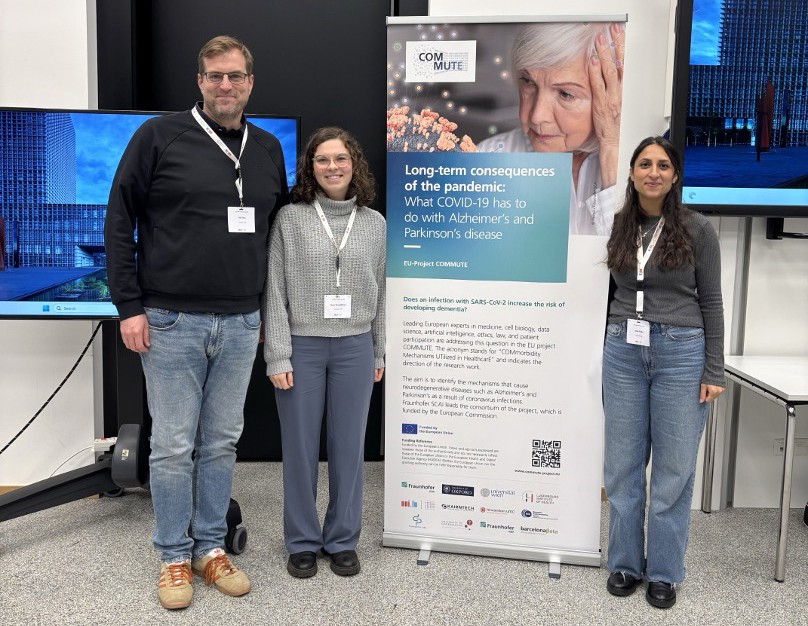
Prof. Rejko Krüger (left) and Dr. Feng HeFeng (right)

5. Pharmacoidea (HU)

(Summary and lab photo to be completed)